
(in English)
Under review
 Fabricio Vasselai (2026). Meta-measuring Democratization with Constrained Supervised Ensembles. In: . .
How much country regimes are electorally democratic is one of the most vital, but hardest, questions faced by social scientists and many policy makers. Countless approaches have been proposed, relying on varying combinations of objective info and expert judgment. Besides carrying over authors’ biases, those have resulted in hard-to-interpret or non-interpretable measurement. We propose a ‘wisdom of crowds’ solution that leverages past scholarly knowledge, using existing human classifications of regimes (a.k.a. typologies) as labeled data. First, separate supervised learners with domain-informed monotonic constrains learn how an assortment of those typologies classified regimes – conditioning on chosen country-year features. Then, their ensemble is used to output, for each country-year (even if out-of-sample) since 1789, an interpretable measure: the average probability that said country-year would be classified as electorally democratic by scholars if given the chosen set of features. Moreover, such measure is, in expectation, guaranteed to be less biased and more accurate than any individual typology (or learner based on it) randomly chosen among the ones used to train our technique.
 Fabricio Vasselai. A geospatial analysis of the link between personal voting and localism in Open List PR systems.
This paper examines the relationship that is often assumed to exist, in multi-member electoral systems with personal voting, between voting for candidates instead of for parties and the emergence of political localism in the electoral arena. More specifically, we both assess the geographical distributions of the electoral support of candidates running in two very different political and cultural contexts but under very similar Open List Proportional rule-sets – those of Brazil and Finland – and then test whether those patterns of geographical distribution affect the odds of winning a legislative seat. In order to do so, we employ National Lower Chamber results from both countries, between 1994-2018, georeferenced at the electoral circumscription level and at the level of the municipalities that existed within electoral circumscriptions. First, spatial auto-correlation and spatial disproportionality measures show that few candidates end up having a geographically concentrated electoral support. Second, results from a Bayesian multilevel model show that both concentrating and spreading votes across the territory predict an increase in the odds of winning a seat. However, in practice that is true mostly for incumbents – very rarely challengers achieve the high levels of either geographical concentration or, conversely, of territorial homogeneity, that would predict a relevant increase in the odds of winning.
Peer-reviewed
 Fabricio Vasselai (2022). Iterative Calculus of Voting Under Plurality. In: Proceedings of the Association for the Advancement of Artificial Intelligence (AAAI). 36(5), 5208-5218. [Impact Score: 25.57].
We formalize a voting model for plurality elections that combines Iterative Voting and Calculus of Voting. Each iteration, autonomous agents simultaneously maximize the utility they expect from candidates. Agents are aware of neither other individuals’ preferences or choices, nor of the distribution of preferences. They know only of candidates’ latest vote shares and with that calculate expected rewards from each candidate, pondering the probability that voting for each would alter the election. We define the general form of those pivotal probabilities, then we derive efficient exact and approximated calculations. Lastly, we prove formally the model converges with asymptotically large electorates and show via simulations that it nearly always converges even with very few agents.
Book Chapters
 Allen Hicken, Samuel Baltz, Fabricio Vasselai (2022). Political Institutions and Democracy.
In: Why Democracies Develop and Decline. Cambridge University Press, p.163-184.
(other languages)
Peer-reviewed
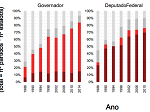 Fernando Limongi, Fabricio Vasselai (2018). Entradas e Retiradas: Coordenação Eleitoral entre eleições para diferentes cargos no sistema partidário brasileiro. In: Brazilian Political Science Review. 12(3), 1-27.
In this article, we present new data on electoral alliances (coligações) that were formed to contest Brazilian general elections between 1986 and 2014. We present evidence to show that alliances formed for gubernatorial and lower house elections are connected to one another. These joint alliances are part of complex coordination strategies for managing the entry and withdrawal of candidates for concomitant elections regulated by different rules. As we shall show, these joint strategies result in: 01. interlinked processes of party concentration in subnational executive elections, and party fragmentation in national lower-house elections; which is the result of 02. the emergence of political parties that specialize in contesting elections for different political offices.
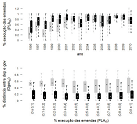 Fabricio Vasselai, Umberto Mignozzetti (2015). O Efeito das Emendas ao Orçamento no Comportamento Parlamentar e a Dimensão Temporal: Velhas Teses, Novos Testes. In: Revista Dados. 57(3), 817-853.
In this article the authors examine whether, between 1996 and 2010, the Executive’s execution of individual amendments proposed by federal deputies to the budget was responsible for increasing the proximity between parliamentary votes and government preferences in roll-calls. The possible influence of such amendments is where scholars still search for a non-partisan, personal and parochial component of the Legislative support of the Executive. However, both the usual defense of this idea as well as its refutation have considerable gaps to be filled, leaving the question unresolved as time as a factor was not considered in tests or because their methodological approaches require adjustments. This investigation addresses these problems by verifying whether the distance between the ideal points of congressmen and of the appointments by the government chief whip in a given year are influenced by the execution of the budget amendments made by deputies – on the same year as well as on previous ones. We propose to model the temporal between amendments and legislative support, correcting serial auto-correlation, controlling for the coalition membership and dealing with the inherent problems of instrumentalization that come with these types of models.

